Should You Clean Your Roof and Home Exterior Before Rainy Season?
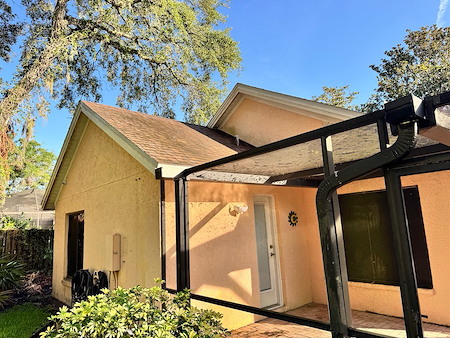
What Pasco County Homeowners Need to Know Before the Storms Roll In
Rainy season in Pasco County runs from late May through October. That's five months of daily thunderstorms, high humidity, and standing moisture — exactly what algae, mold, and mildew need to take hold on your roof and home exterior.
The question we hear every spring from homeowners in Wesley Chapel, Land O' Lakes, Lutz, and New Tampa is the same: Should I clean my roof and house before the rain starts — or wait until it's over?
The answer matters. And it's not the one most people expect.
Why Rainy Season Changes Everything for Your Roof
Florida's humidity is relentless. According to UF/IFAS Extension, mildew thrives outdoors during Florida's humid periods, producing spores in large numbers — and during the wet season, those spores are everywhere. They land on your roof, your siding, and your driveway. If growth is already present when the rain arrives, moisture locks it in and accelerates the damage.
The black streaks you see on roofs across Connerton, Wilderness Lake Preserve, and Seven Oaks aren't dirt — they're a cyanobacterium called Gloeocapsa magma. It feeds on the limestone filler in asphalt shingles. The longer it remains on the roof, the more it can contribute to premature staining and deterioration over time. Every rainy season gives it five more months of fuel.
Cleaning before the season starts removes that growth before it compounds. Cleaning after removes what survived. Both have value — but cleaning before is the smarter move.
What Happens to Your Home Exterior During Rainy Season
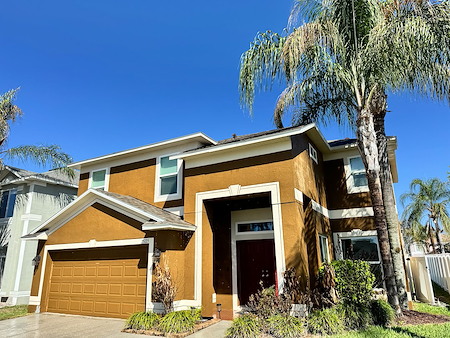
It's not just your roof. Your siding, fascia, and soffit take a beating too.
UF/IFAS Extension notes that landscaping placed too close to a home's foundation creates high-humidity zones that allow algae and mildew to grow on exterior surfaces. Add five months of daily afternoon rain, and you've got a greenhouse effect running up the sides of your house.
Vinyl siding, painted stucco, and block exteriors all develop organic growth faster when the surface is already contaminated going into rainy season. A clean surface repels growth longer. A dirty one invites it in.
The Right Way to Clean — Soft Wash Only
High-pressure washing is not appropriate for roofs or house exteriors. It strips granules from shingles, damages stucco, and forces water behind siding — all problems that get worse when rainy season hits.
The Asphalt Roofing Manufacturers Association (ARMA) recommends low-pressure cleaning using an appropriate chemical solution — what the industry calls soft washing. This method eliminates algae, mold, and mildew at the root without damaging roofing materials or voiding manufacturer warranties.
At The Pasco Pressure Washing, soft wash is our standard — for every roof, every house, every time. No exceptions.
Before we begin any house soft wash service, we pre-wet your plants and landscaping and protect outdoor equipment including pool pumps, Ring doorbells, and exterior fixtures. Your property is covered from the moment we arrive.
We also offer virtual and text-based quoting, so you can get a price without scheduling a site visit first.
Does Rainy Season Affect Your Homeowner's Insurance?
It can. Insurance carriers increasingly use aerial imagery to assess roof condition during policy renewals. A roof visibly covered in algae streaks or biological growth is a documented condition — and it can affect how your coverage is evaluated.
This doesn't mean you'll automatically lose coverage over a dirty roof. But it does mean the condition of your roof is visible to your carrier in ways it wasn't ten years ago. Maintaining a clean roof is part of maintaining a well-documented home.
Frequently Asked Questions — Rainy Season Roof and Exterior Cleaning
Before. Removing algae, mold, and Gloeocapsa magma before the season starts means five months of rain falls on a clean, protected surface instead of accelerating existing growth. If your roof already has visible black streaks or green buildup, cleaning before rainy season hits is the highest-impact move you can make this spring.
No. Rain does not remove algae or mold. In fact, rainfall creates the moisture conditions those organisms need to spread. Gloeocapsa magma and similar biological growth embed into roofing material — they don't wash away in the rain. Only a proper soft wash treatment eliminates them.
In Pasco County's climate, most homeowners see results lasting one to three years depending on tree coverage, roof pitch, and shading. North-facing roof sections and heavily shaded areas recolonize faster. Homes in communities like Connerton and Wilderness Lake Preserve — where mature trees are common — may benefit from cleaning on the shorter end of that range.
It significantly slows regrowth. A clean exterior surface doesn't give biological growth an existing colony to build on. That's the advantage of cleaning before the season rather than after. You're not just removing what's there — you're resetting the surface heading into the most growth-favorable months of the year.
No. Cleaning mid-season is still worth doing. You stop active growth, remove the colony, and prevent further damage for the remainder of the season. "Waiting until it's over" means allowing months of additional deterioration. If you're seeing new streaks or growth, call us now — don't wait until October.
Daily moisture creates conditions where mold, mildew, and algae establish on vinyl siding, painted stucco, and block walls — especially on north-facing and shaded surfaces. According to UF/IFAS Extension, high-humidity zones near your foundation and landscaping accelerate surface growth. A professional house soft wash before or during rainy season removes existing growth and slows regrowth through the wet months.
Carriers increasingly use aerial imagery when reviewing policies. A roof with visible biological growth is a documented condition that may factor into coverage decisions at renewal. Keeping your roof clean is one of the simplest ways to show your home is being maintained — and that documentation starts with the roof being clean when aerial photos are taken.
Most roofs in Wesley Chapel, Land O' Lakes, Lutz, and New Tampa benefit from soft wash cleaning every one to two years. Heavily shaded homes or those with significant tree coverage may need annual attention. If you're seeing black streaks, green patches, or general darkening on your shingles, that's your signal — don't wait for the next inspection cycle.
Trusted Since 1989 — Serving Pasco County Homeowners
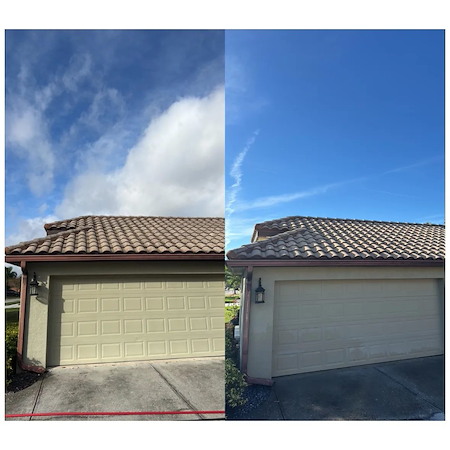
The Pasco Pressure Washing has roots going back to 1989. Owner Jennifer Littlejohn brings that same commitment to Pasco County homeowners today — licensed, insured, and built around soft wash methods that protect your home instead of damaging it.
We serve Wesley Chapel, Land O' Lakes, Lutz, New Tampa, Connerton, Wilderness Lake Preserve, Suncoast Lakes, Seven Oaks, Wiregrass Ranch, Meadow Pointe, Epperson, and surrounding Pasco County communities.
If your roof or exterior is carrying growth into rainy season, now is the time to deal with it.
Get a Free Quote for Your Pressure Washing Project in Wesley Chapel Today!