Why Is Your House Turning Green? Do You Need to Paint It or Just Clean It?
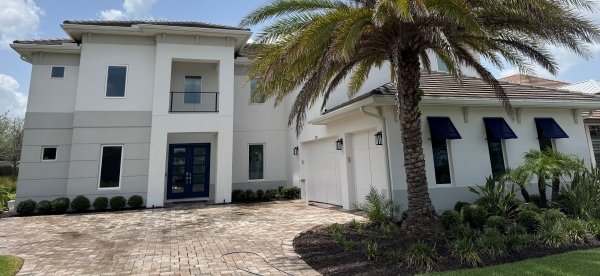
If you’ve noticed green algae, black streaks, or dark stains spreading across your siding, stucco, or exterior walls, you may be wondering whether your home needs a fresh coat of paint — or simply a good cleaning.
In most cases, you don’t need to repaint. What you’re seeing is usually algae or mildew growing on the surface — not a sign that the paint has failed. Here’s how to tell the difference and what actually fixes it.
Why Your House Is Turning Green
The green (or sometimes black or gray) film on your home’s exterior is typically algae or mildew growing on exterior surfaces where moisture, shade, and organic debris create ideal conditions. Florida’s climate makes this almost unavoidable: high humidity, frequent rain, and warm temperatures create ideal growing conditions, especially in shaded areas, near landscaping, or on the side of the house that gets the least direct sun. That’s why one wall can look fine while another is visibly green — it’s about moisture and shade exposure, not the paint or siding itself.
Left alone long enough, this buildup does more than look bad. Algae and mildew hold moisture against the surface, which may contribute to premature wear on paint and siding over time — so it’s worth addressing, even though it isn’t usually urgent.
Quick note for fence and deck owners: a bright turquoise-green tint on new, pressure-treated wood is a different issue — copper leaching from the treatment chemicals reacting with moisture, not algae. It typically fades over time.
Another quick note: not every black streak is algae or mold. Streaks running down from your gutters are sometimes just dirt and roof runoff, and small, hard black dots (especially near mulch beds) can be artillery fungus — neither responds to the same treatment as algae. A professional can usually tell the difference at a glance.
Is It Algae, or Do You Actually Need to Paint?
This is the real question, and it’s usually easy to answer:
| Sign | What It Means |
|---|---|
| Green/black film that comes off when cleaned | Algae or mildew — a soft wash resolves it |
| Surface looks fine underneath once cleaned | You likely don’t need to paint yet |
| Staining that remains after professional cleaning | May be deeper discoloration — worth a closer look |
| Paint peeling, bubbling, or cracking | A cleaning issue underneath a paint issue — repainting is likely needed |
| Chalky residue that rubs off on your hand | Paint is breaking down (oxidizing) — cleaning helps, but paint is aging |
If cleaning restores the surface and the paint underneath is intact, you may have solved the problem for a fraction of the cost. A professional house soft wash typically runs $150–$650, compared to $3,000–$8,000 or more for a full exterior repaint in Florida.
Why You Shouldn’t Just Paint Over It
If your home does need a fresh coat, don’t skip the cleaning step first. Painting over algae or mildew is one of the most common reasons a paint job fails early. The growth doesn’t die just because it’s covered — it continues underneath, causing peeling, bubbling, and poor adhesion well short of how long a properly prepped paint job should last.
This isn’t just a rule of thumb — it’s an industry standard. Professional painting contracts commonly reference defined levels of surface preparation (PDCA/MPI RSP-9) that require mildew treatment before painting, and paint manufacturers generally require a clean, mildew-free surface for their products to perform and hold up as expected. A professional soft wash isn’t optional prep — it’s the step that makes a paint job actually last.
Soft Washing vs. Pressure Washing

Not all exterior cleaning is the same, and the wrong method can cause the very damage you’re trying to avoid.
High-pressure washing can strip paint, force water behind siding, and crack stucco — especially on the softer, more porous surfaces common on Florida homes. Soft washing uses low pressure combined with a professional-grade cleaning solution to kill algae and mildew at the source, then rinses the surface clean while greatly reducing the risk of damaging paint, stucco, or siding. Because it treats the growth rather than just knocking it loose, results also last longer than surface-only cleaning methods.
Can I Clean It Myself?
Small, isolated spots of algae may be manageable with homeowner-safe cleaning products. But larger areas of siding, painted stucco, or multi-story homes are a different story — too much pressure or the wrong chemicals can strip paint, force water behind siding, or leave uneven, blotchy results that look worse than the original staining. For anything beyond a small spot check, professional soft washing generally provides a more even, longer-lasting result while reducing the risk of surface damage.
What To Do Right Now
- Take a look at the affected area — does it look like surface film, or is the paint itself peeling or bubbling?
- If it’s surface growth, schedule a professional soft wash before assuming you need to repaint.
- If cleaning reveals peeling, cracking, or bare spots underneath, that’s a sign to talk to a painting professional.
- If you’re planning to paint regardless, get the surface professionally soft washed first — not pressure washed.
- Keep before-and-after photos for your own records, especially if you’re preparing to sell or documenting home maintenance.
Frequently Asked Questions
Almost always algae or mildew, thriving in Florida’s heat and humidity — especially in shaded or moisture-prone areas. It’s typically a cosmetic and maintenance issue, not a sign of damage.
All three can appear similar, and green or black discoloration is common to each. Algae tends to sit on the surface; mold and mildew can be more persistent. A professional can identify which you’re dealing with during an assessment.
Painting over untreated algae or mildew usually leads to early paint failure — the growth continues underneath, causing peeling and poor adhesion. Cleaning first is the correct approach whether you’re painting or not.
Not typically in the short term — it’s mostly cosmetic. But left long enough, trapped moisture can accelerate wear on paint and surfaces over time, which is why addressing it sooner rather than later helps.
Shade and moisture are the main drivers. The side of your home that gets the least direct sunlight — often the north-facing side, or areas near trees and landscaping — stays damp longer and grows algae faster.
Usually no — most algae and mildew staining lifts with professional cleaning. In rare cases where growth has been left for a long time, some discoloration or paint oxidation can remain, which is a sign the paint itself may be reaching the end of its life rather than a cleaning issue.
Florida insurers increasingly use aerial and drone imagery to review homes, but that scrutiny is typically focused on roof condition rather than siding. Keeping your exterior clean is still good practice for curb appeal and routine maintenance, even if it isn’t usually an insurance trigger the way roof staining can be.
Serving Land O’ Lakes, Wesley Chapel, Lutz, and New Tampa
If your home’s exterior is showing green or black discoloration, The Pasco Pressure Washing can help you determine whether professional cleaning is all you need, or whether it’s time to speak with a qualified painting contractor. We’ve been soft washing homes throughout Land O’ Lakes, Wesley Chapel, Lutz, and New Tampa since 1990, using low-pressure methods that protect your paint, stucco, and siding while removing the buildup underneath.
Schedule your house soft wash today.
Get a Free Quote for Your Pressure Washing Project in Wesley Chapel Today!