Got a Letter From Your Insurance Company About Your Roof? Here’s What Florida Homeowners Need to Know
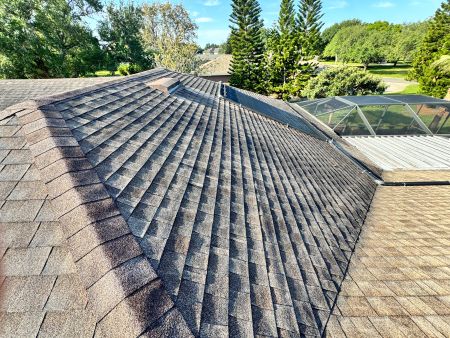
If you opened your mailbox and found a letter from your insurance company about algae, staining, or “biological growth” on your roof, you’re not alone — and you’re not out of options.
Insurance companies across Florida are using aerial and satellite imagery to review roofs without ever knocking on your door. When that imagery shows dark streaking or discoloration, homeowners get a letter warning that their policy could be canceled or non-renewed unless the roof is addressed with professional roof cleaning. It’s become common enough that most homeowners who get one have never seen anything like it before — and the letter rarely explains what your rights actually are.
Here’s what to know before you do anything else.
Quick reference — what does your letter actually say?
| Letter Type | What It Means | What To Do |
|---|---|---|
| Information Request | Insurer wants updated photos or documentation | Submit what’s requested |
| Inspection Request | Roof needs a professional evaluation | Schedule an inspection |
| Conditional Renewal | Coverage continues if the issue is corrected | Resolve before the deadline |
| Non-Renewal Notice | Policy won’t renew unless requirements are met | Act before the deadline |
If your letter cites algae, staining, or biological growth specifically — not missing shingles, storm damage, or structural issues — everything below applies directly to you.
Why You Got the Letter
In Florida, dark streaks on asphalt shingle roofs are most commonly caused by algae — specifically Gloeocapsa magma, which thrives in the state’s warm, humid climate. It’s a cosmetic and maintenance issue, not proof of structural failure.
Insurers treat it as a red flag anyway. Roof condition affects how likely a claim is down the road, so a stained roof gets grouped in with worn shingles and aging materials as a reason to review your policy. Aerial and drone imagery lets insurers screen every roof in a neighborhood at once, which is why letters often show up even if you’ve never filed a claim or spoken to your insurer in years.
What Florida Law Actually Says
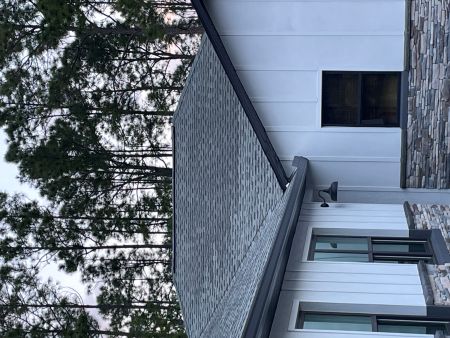
This is the part most letters leave out.
If your roof is under 15 years old: Florida Statute 627.7011(2)(b) prohibits an insurer from refusing to issue or renew your policy solely because of the roof’s age. Algae alone isn’t grounds for cancellation on a roof still within that window.
If your roof is 15 years or older: Florida Statute 627.7011(2)(c) gives you the right to have the roof independently inspected — at your own expense — before your insurer can require a full replacement. If that inspection shows the roof has 5 or more years of useful life remaining, your insurer cannot refuse to renew your policy based on age alone. As of 2024, that inspection can be performed by a licensed roofing contractor, not just a general contractor or home inspector.
On timing: Florida Statute 626.9201 requires your insurer to give you written notice — generally at least 45 days before a nonrenewal takes effect, with the reason stated in writing. If your policy is being canceled mid-term for a reason other than non-payment, that notice period is also 45 days (or 20 days if it’s within your first 90 days of coverage). If your insurer doesn’t follow these notice rules, your coverage stays active until the proper notice is given.
As of July 1, 2026: Florida’s newest legislation (HB 815) closes a loophole insurers were using — it extends these age-based protections beyond standard homeowner policies to cover condo associations, landlords, and other residential property owners who weren’t previously covered under the original rule.
None of this means your insurer is doing something illegal by sending the letter. It means you have documented rights before you’re forced into a decision you don’t need to make yet.
Is It Algae, or Is It Actual Damage?
This is the real question, and it’s worth answering honestly before you spend money in either direction.
Signs it’s likely just algae (a cleaning issue):
- Dark streaking, mostly on the north-facing or shaded side of the roof
- Staining that follows a pattern down from the ridge
- No curling, cracking, or missing granules underneath the staining
- Roof is otherwise structurally sound with no leaks
Signs it may be more than cosmetic:
- Granule loss exposing bare asphalt
- Curling or lifting shingle edges
- Soft spots or sagging
- Active leaks or interior water staining
The Asphalt Roofing Manufacturers Association (ARMA) has long noted that algae staining on asphalt shingles is a surface-level condition — it affects appearance, not the shingle’s ability to protect your home. That distinction matters, because it’s exactly what separates a $300–$900 cleaning from an $8,000–$12,000+ replacement.
What Actually Resolves the Letter
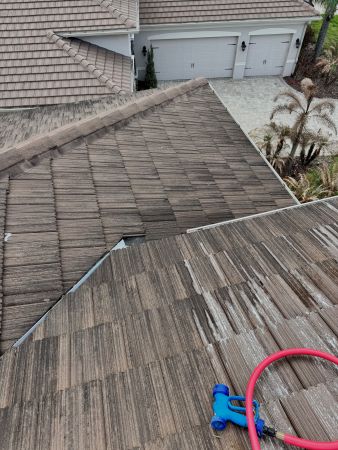
A professional soft wash — not a pressure wash — is the correct method for cleaning algae, moss, and staining from a roof.
High-pressure washing strips the protective granules off asphalt shingles, which shortens the life of the roof and can void manufacturer warranties. It doesn’t kill the algae at the root, either, so it grows back faster than before. Soft washing uses low-pressure application with a cleaning solution designed to kill the algae without damaging the shingle surface — which is also why manufacturers and roofing associations recommend it over pressure washing for this exact situation.
If the insurer’s concern is primarily algae or biological growth, professional soft washing — combined with before-and-after photographs and a paid invoice — may provide the documentation needed to demonstrate that the condition has been addressed.
If algae is visible on your roof, there's a good chance you've also noticed mildew or organic staining on your home's siding, soffits, or gutters. Many homeowners choose to combine their roof cleaning with a professional house washing service to restore the appearance of their entire exterior in one visit.
What To Do Right Now
- Read the letter closely — note the deadline and the specific reason given.
- Don’t panic-schedule a replacement. In most algae cases, it isn’t necessary.
- Know your roof’s age. If it’s under 15 years, algae alone can’t be used to cancel or deny renewal.
- If it’s 15+ years, you’re entitled to an independent inspection before replacement can be required.
- Get the roof professionally soft washed by a licensed, insured provider, with before-and-after photos as documentation.
- Submit that documentation to your insurer before your deadline.
Frequently Asked Questions
No. Algae is a surface-level growth caused by heat and humidity — it affects appearance, not the shingle’s ability to protect your home. In many cases, professional cleaning removes the algae and restores the roof’s appearance. If the insurer’s concern is limited to biological growth and the roof is otherwise in good condition, that may satisfy the insurer’s request.
If your letter cites algae, staining, or biological growth, a professional soft wash with documentation typically resolves the issue. If the letter cites structural damage instead, cleaning alone won’t address it.
Most letters give 30 to 60 days, but the exact deadline is stated in your specific letter — always confirm it there.
Not if your roof is under 15 years old — Florida law prohibits insurers from refusing to renew a policy based solely on roof age. For roofs 15 years or older, you’re entitled to an independent inspection before replacement can be required.
No — these Florida statutes apply to Citizens the same as private carriers. If Citizens sent your letter, the same rights and deadlines apply.
Serving Land O’ Lakes, Wesley Chapel, Lutz, and New Tampa
If you've received a letter like this and you're in Pasco County, The Pasco Pressure Washing can help. We provide professional roof cleaning in Land O' Lakes and roof cleaning in Wesley Chapel, along with service throughout Lutz and New Tampa. Our team can professionally soft wash your roof and provide the documentation you need to meet your insurer's deadline.
This article is provided for general educational purposes and does not constitute legal or insurance advice. Requirements vary by insurance carrier and individual policy. For questions about your specific policy or notice, contact your insurance agent or the Florida Office of Insurance Regulation.
Get a Free Quote for Your Pressure Washing Project in Wesley Chapel Today!