House Washing in Land O’ Lakes: Protecting Homes from Florida Humidity and Algae
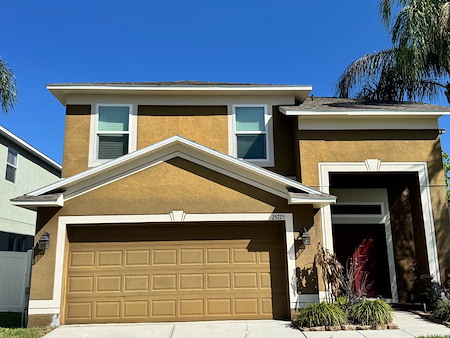
Why Homes in Land O’ Lakes Develop Organic Growth So Quickly
Homes throughout Land O’ Lakes are exposed to a climate that naturally accelerates organic growth on exterior surfaces. Florida’s subtropical environment creates a combination of heat, moisture, and airborne organic particles that encourage algae and mildew to develop on siding. While many homeowners initially notice faint green staining or dark streaks, these visible signs are simply the result of microscopic organisms multiplying on damp surfaces.
Unlike dry regions of the country, Florida rarely experiences extended periods of low humidity. Instead, exterior surfaces are regularly exposed to moisture from morning dew, irrigation systems, rainfall, and high humidity levels. These conditions allow algae spores that travel through the air to settle onto siding and begin forming colonies.
Over time, these colonies expand into thin biological films that trap moisture against exterior materials. As the organisms grow, they begin producing the green or black discoloration that homeowners commonly see along shaded walls and under rooflines.
In communities across Land O’ Lakes, this process occurs naturally and repeatedly due to the local climate.
Environmental Conditions in Pasco County That Accelerate Algae Growth
Several environmental factors specific to Land O’ Lakes and the surrounding Pasco County region contribute to faster organic buildup on homes. Understanding these conditions helps explain why routine exterior cleaning becomes an important maintenance task for many Florida properties.
Humidity is one of the most significant contributors. Relative humidity levels in this region often remain between 70 and 90 percent during much of the year. When the air contains that much moisture, exterior surfaces rarely dry completely. Even after rainfall stops, siding may remain damp for extended periods.
Rainfall patterns also influence algae growth. Summer thunderstorms frequently deliver heavy rain followed by warm temperatures. This cycle of moisture and heat creates ideal conditions for algae to spread across siding.
Landscaping and tree coverage play an additional role. Many neighborhoods in Land O’ Lakes feature mature oak trees and dense landscaping that provide shade throughout the day. While shade improves comfort and aesthetics, it also slows evaporation and allows moisture to remain on exterior surfaces.
Homes located near retention ponds, lakes, or wetlands may experience even higher humidity levels. These water features contribute additional moisture to the surrounding environment and can accelerate organic buildup on siding.
How Algae and Mildew Affect Exterior Materials
Although algae staining is often viewed as a cosmetic issue, organic growth can influence the long-term condition of exterior surfaces. Algae colonies retain moisture against siding, trim, and painted materials. When moisture remains trapped against these surfaces, it can gradually affect coatings and finishes.
Painted siding may begin losing its brightness as organic residue accumulates. Vinyl siding can develop dull or uneven coloration as biofilms spread across the surface. On stucco homes, algae may appear as green streaking that gradually expands over time.
Mildew and mold may also develop in areas where moisture becomes trapped around soffits, trim boards, and shaded corners of the home. These organisms feed on organic particles in the environment and thrive in humid conditions.
If left untreated, the buildup can spread across larger sections of the home’s exterior. Regular cleaning helps remove these organisms before they begin causing more noticeable staining or surface deterioration.
What Professional House Washing Removes from Exterior Surfaces
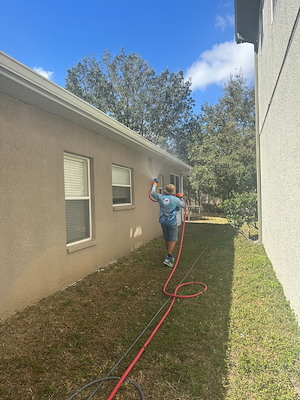
Professional house washing targets the biological organisms responsible for staining rather than simply rinsing away dirt. Exterior surfaces in Florida accumulate a mixture of contaminants that include algae, mildew, airborne pollen, and environmental residue.
Cleaning solutions are designed to break down these contaminants so they can be safely removed from the siding. When the organisms are neutralized, the biofilm that holds them in place begins to dissolve.
Common contaminants removed during house washing include:
- Green algae staining along shaded siding
- Dark mildew streaks beneath soffits
- Pollen buildup from nearby trees
- Organic residue caused by environmental exposure
Removing these materials helps restore the appearance of siding while preventing organisms from spreading further across the exterior of the home.
Why Soft Washing Is the Preferred Cleaning Method for Siding
Many homeowners assume house washing involves blasting siding with high pressure water. In reality, modern exterior cleaning relies primarily on soft washing techniques. Soft washing uses specialized cleaning solutions combined with low-pressure rinsing to eliminate organic growth safely.
High pressure cleaning can potentially damage siding, force water behind panels, or strip protective coatings from exterior materials. Soft washing avoids these risks by allowing the cleaning solution to perform the majority of the work.
The solution penetrates the biofilm that forms on siding and neutralizes the algae colonies responsible for staining. Once treated, the contaminants can be gently rinsed away without damaging the surface.
This method is especially important for materials such as vinyl siding, painted wood, stucco, soffits, and fascia boards.
Signs Your Home May Benefit from House Washing
Organic buildup typically develops gradually, so the early signs can be subtle. Homeowners often first notice faint green discoloration on shaded walls or light streaking beneath rooflines. These small changes often indicate that algae colonies have already begun forming on the surface.
Additional signs may include:
- Dark streaks forming along trim lines
- Dull or uneven siding coloration
- Pollen accumulation along soffits
- Visible staining on shaded exterior walls
As algae spreads, these stains become more visible from the street. Addressing the buildup early prevents the staining from expanding across larger areas of the home.
Maintaining Exterior Surfaces in Florida’s Climate
Florida’s climate creates ongoing exposure to organic growth and environmental residue. Routine house washing helps remove these contaminants before they begin affecting the appearance and condition of exterior materials.
By eliminating algae colonies and organic buildup, homeowners can maintain cleaner siding and preserve the visual appearance of their property. Regular exterior cleaning also helps prevent moisture from remaining trapped against siding surfaces for extended periods.
For homes throughout Land O’ Lakes, adapting maintenance routines to the local environment helps protect exterior materials while preserving the overall curb appeal of the property.
Get a Free Quote for Your Pressure Washing Project in Land O' Lakes Today!